
Celtic Sea Salt VS Himalayan Salt
Name the most crucial ingredient in cooking. The answer is Salt.
Being an essential part of every cuisine most people knows that salt improves the flavor.
In recent times, the demand for salt grew, and that is why supermarkets are selling a wide variety of salts. Celtic salt, Himalayan pink salt, regular salt, pink salt, Epsom salt, and what not!
With all the options given, deciding which one to put in the shopping bag is nothing more than a challenge. Indeed, the choice is not that simple as a child’s play!
To make it easier for you, we created this article on Celtic sea salt VS Himalayan salt. Get along to know the composition and specialties before buying the suitable salt for everyday use!
Origin of the Celtic Sea Salt and Himalayan Pink Salt
Most of the salts that the supermarket sells are extracted from seawater remnants from evaporation or directly from seawater.
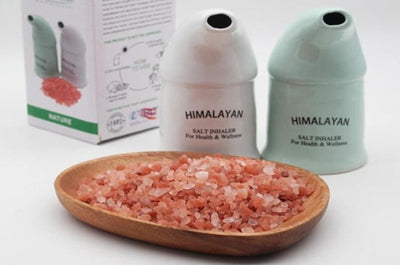
The Himalayan Pink Salt is slightly different here. It is hand-extracted from the Khewra Salt mines situating at the foothills of the Himalayas at Punjab, Pakistan. Every mineral occurs naturally in the salt. Nothing is extracted or added while refining.
The composition of Celtic Sea Salt is 33 percent sodium with 34 trace minerals, occurring naturally in the salt.
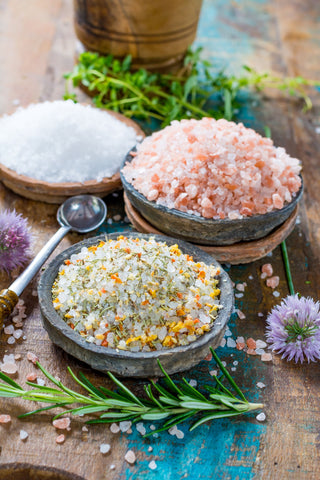
Moisture Content
The moisture content of the Himalayan Pink Salt is pretty low. Nearly 0.026 percent of this pink salt consists of residual moisture.
The Celtic Salt ranks quite high in this context, with 13 percent Moisture Content. It gathers all the moisture during the extraction process.
Can You Swap One for the Other?
For everyday cooking you can usually use either type of salt.
You might find that you need to adjust how much you use though.
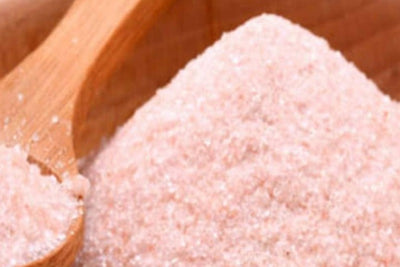
A spoonful of very fine salt packs together differently from a spoonful of larger crystals. This can make a difference if you are measuring by volume.
For casual cooking it is easy enough to start with less and taste the food as you go.

Which Salt Is Better for a Grinder?
Himalayan pink salt is probably the simpler choice if you use a salt grinder.
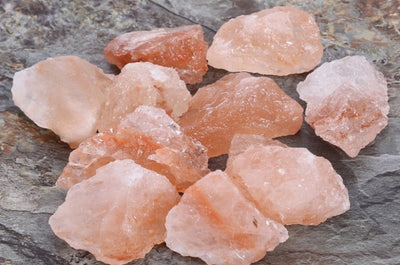
Coarse pieces are widely sold for this purpose and the crystals are normally dry.
Just make sure the chunks are not too large for the grinder you have.
Celtic sea salt can be more troublesome in some mills because of the moisture.
The grains can stick together inside.
Some grinders are made to handle damp salt. Others are not. It is worth checking before filling yours.
A salt pot is often the easier option for Celtic salt.
Why Does Celtic Sea Salt Clump Together?
Open a packet of Celtic sea salt and you may notice that some of it has stuck together.
There is usually nothing strange about this.
Celtic salt naturally contains more moisture than dry salts. This can cause the grains to form small clumps while they are sitting in the packet.
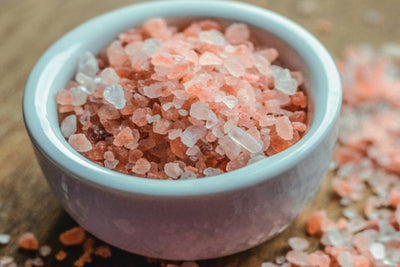
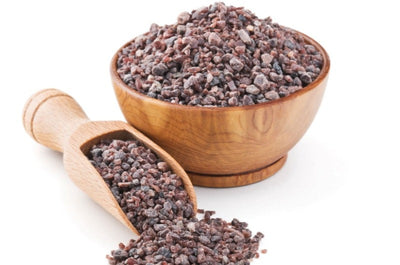
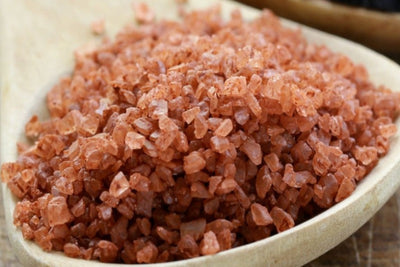
You can break them apart with a spoon or with your fingers.
It is one of the little differences you get used to once you have been using Celtic salt for a while.
How Should You Store Them?
Himalayan pink salt is quite straightforward to store.
Keep it somewhere dry and close the packet or container after using it.
Celtic sea salt is slightly different.
It naturally feels damp so you should not expect it to stay completely loose like table salt.
A small covered salt pot works well if you use it regularly.
Try to keep both types of salt away from steam coming from the kettle or cooker. Extra moisture can make any salt more likely to stick together.
Using Salt at the Table
Not all salt has to disappear into the food while it cooks.
Sometimes larger grains are useful when you want the salt to stay noticeable on the surface.
Coarse Himalayan salt can give you that bit of crunch.
Celtic salt feels softer and has a different texture when used in the same way.
This is one of those things that really comes down to taste. You might like one in cooking and prefer the other at the table.

What Should You Check Before Buying?
Have a look at more than just the front of the packet.
Start with the grain size.
If you want salt for a grinder then look for coarse crystals. If you want something for everyday cooking then a finer salt may be easier.
With Celtic sea salt you should expect some moisture.
With Himalayan pink salt you should expect some variation in colour.
Neither needs to look exactly the same from one packet to the next.
Do You Need Both?
Probably not.
You could quite happily cook with one type of salt.
That does not mean there is no point in keeping both though.
They feel different enough that you may naturally find different uses for them.
After using both for a while you will probably find yourself reaching for one more often than the other.
That is really the easiest way to decide which one you prefer.